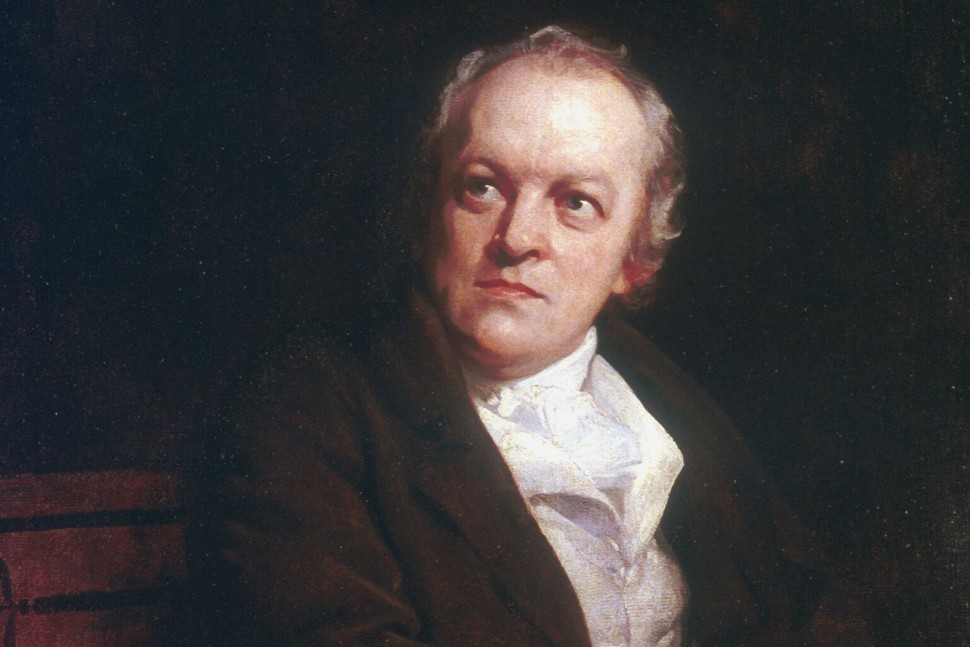
I know of nobody more original, more of a one-off than William Blake (1757-1827). He was original in in his life, his art, and his poems. I can’t remember where I first encountered this poem, but I’ve posted it before on my website—as “a poem for Brexit.” It’s a poem of desolation. I might publish it now as “a poem for the election,” perhaps highlighting the line: “Wisdom is sold in the desolate market where none come to buy.” Last year I went with my friend to see the spot in Peckham where Blake saw an oak tree “filled with angels, bright angelic wings bespangling every bough like stars.” https://richardswsmith.wordpress.com/2022/12/10/discoveries-and-astonishment-on-a-walk-in-south-east-london/ I wish I could see them too.
I am made to sow the thistle for wheat, the nettle for a nourishing dainty:
I have planted a false oath in the earth; it has brought forth a Poison Tree:
I have chosen the serpent for a counsellor, and the dog
For a schoolmaster to my children:
I have blotted out from light and living the dove and nightingale,
And I have causèd the earthworm to beg from door to door:
I have taught the thief a secret path into the house of the just:
I have taught pale Artifice to spread his nets upon the morning.
My heavens are brass, my earth is iron, my moon a clod of clay,
My sun a pestilence burning at noon, and a vapour of death in night.
What is the price of Experience? Do men buy it for a song,
Or Wisdom for a dance in the street? No! it is bought with the price
Of all that a man hath—his house, his wife, his children.
Wisdom is sold in the desolate market where none come to buy,
And in the wither’d field where the farmer ploughs for bread in vain.
It is an easy thing to triumph in the summer’s sun,
And in the vintage, and to sing on the waggon loaded with corn:
It is an easy thing to talk of patience to the afflicted,
To speak the laws of prudence to the houseless wanderer.

 A Cairn of Poems
Leave a comment