Once you know Dover Beach by Mathew Arnold (1822-1888) it’s hard not to stand by the sea anywhere—but particularly on a singly beach at night—and think of the poem. He captures beautifully the “eternal note of sadness” in the unceasing roar of the waves. But we know he’s a classic, buttoned-up, conflicted. (Is there really a God?) Victorian. The girl he’s with gets little mention, and it’s not hard to imagine her irritated by his meandering thoughts and inaction. The American poet Anthony Hecht (1923 -2004) captures well in a funny poem how she might have felt, although I feel sympathy with her and don’t think her a bitch. An American friend gave me a copy of book of poems by Hecht, and this is the one I always remember.
Dover Beach
The sea is calm tonight.
The tide is full, the moon lies fair
Upon the straits; on the French coast the light
Gleams and is gone; the cliffs of England stand,
Glimmering and vast, out in the tranquil bay.
Come to the window, sweet is the night-air!
Only, from the long line of spray
Where the sea meets the moon-blanched land,
Listen! you hear the grating roar
Of pebbles which the waves draw back, and fling,
At their return, up the high strand,
Begin, and cease, and then again begin,
With tremulous cadence slow, and bring
The eternal note of sadness in.
Sophocles long ago
Heard it on the Ægean, and it brought
Into his mind the turbid ebb and flow
Of human misery; we
Find also in the sound a thought,
Hearing it by this distant northern sea.
The Sea of Faith
Was once, too, at the full, and round earth’s shore
Lay like the folds of a bright girdle furled.
But now I only hear
Its melancholy, long, withdrawing roar,
Retreating, to the breath
Of the night-wind, down the vast edges drear
And naked shingles of the world.
Ah, love, let us be true
To one another! for the world, which seems
To lie before us like a land of dreams,
So various, so beautiful, so new,
Hath really neither joy, nor love, nor light,
Nor certitude, nor peace, nor help for pain;
And we are here as on a darkling plain
Swept with confused alarms of struggle and flight,
Where ignorant armies clash by night.
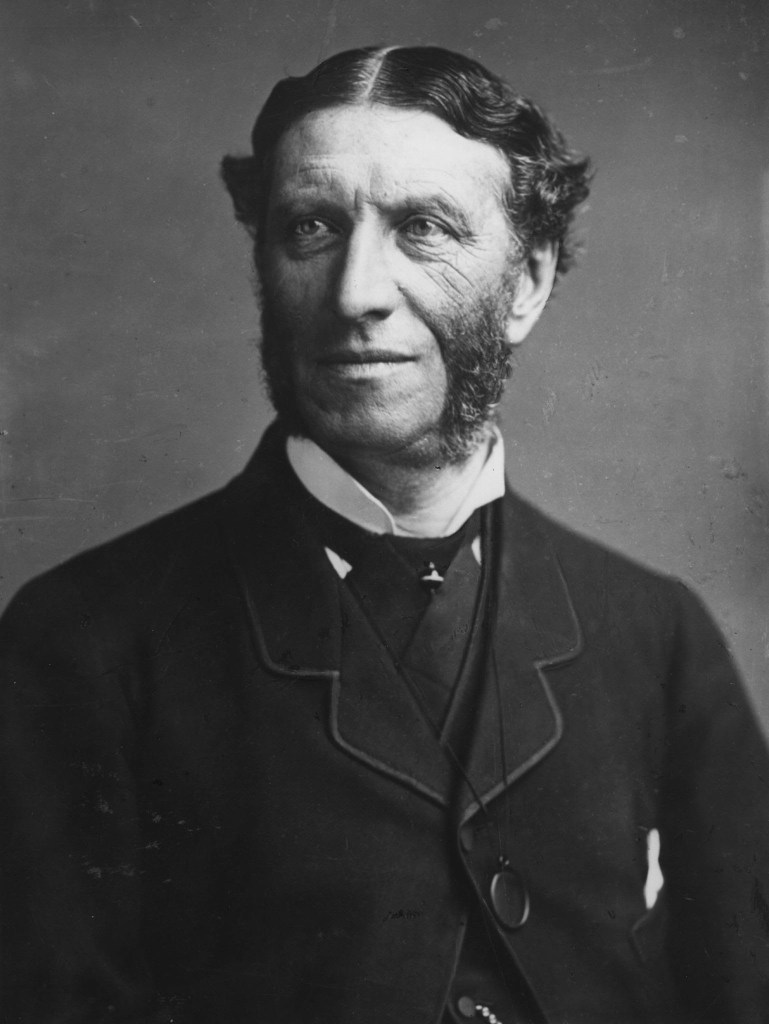
The Dover Bitch
A Criticism of Life: for Andrews Wanning
So there stood Matthew Arnold and this girl
With the cliffs of England crumbling away behind them,
And he said to her, ‘Try to be true to me,
And I’ll do the same for you, for things are bad
All over, etc., etc.’
Well now, I knew this girl. It’s true she had read
Sophocles in a fairly good translation
And caught that bitter allusion to the sea,
But all the time he was talking she had in mind
The notion of what his whiskers would feel like
On the back of her neck. She told me later on
That after a while she got to looking out
At the lights across the channel, and really felt sad,
Thinking of all the wine and enormous beds
And blandishments in French and the perfumes.
And then she got really angry. To have been brought
All the way down from London, and then be addressed
As a sort of mournful cosmic last resort
Is really tough on a girl, and she was pretty.
Anyway, she watched him pace the room
And finger his watch-chain and seem to sweat a bit,
And then she said one or two unprintable things.
But you mustn’t judge her by that. What I mean to say is,
She’s really all right. I still see her once in a while
And she always treats me right. We have a drink
And I give her a good time, and perhaps it’s a year
Before I see her again, but there she is,
Running to fat, but dependable as they come.
And sometimes I bring her a bottle of Nuit d’ Amour.

 A Cairn of Poems
Leave a comment