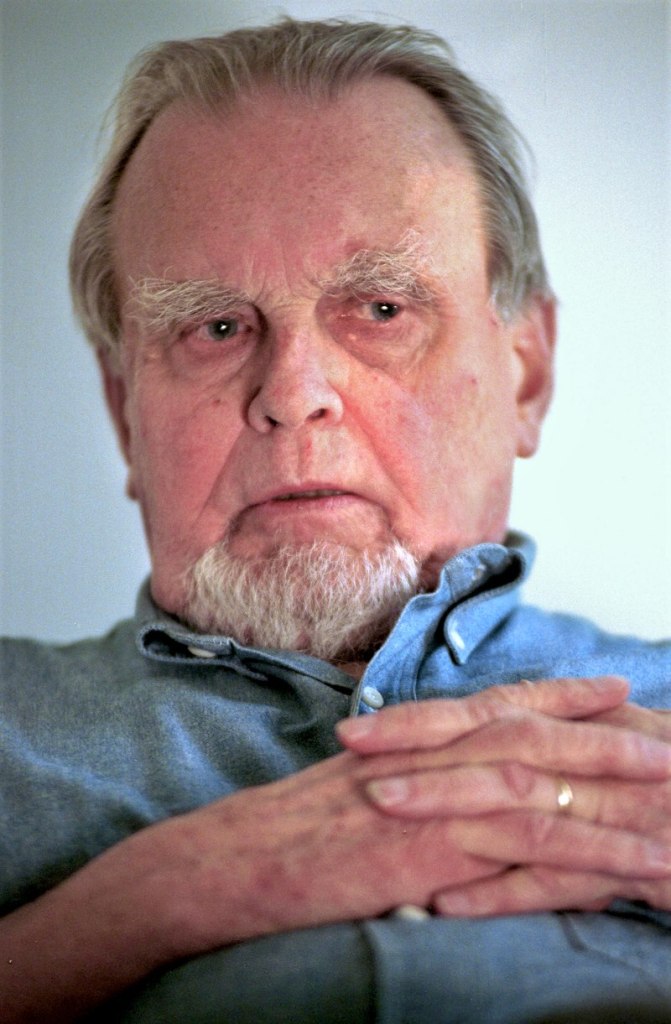
Czesław Miłosz (1911-2004), the Polish-American poet, won the Nobel prize for literature in 1980. Growing up in Poland and surviving the German occupation, he later moved to the United States. He wrote mostly in Polish. I have brushed up against his poetry, reading his poems in anthologies, and copying one, Eyes, into my files, but I don’t know his poetry well. I also encountered him indirectly when I slept in a bed in a Venetian palazzo once occupied by the Russian poet Josef Brodsky, who also won the Nobel prize for literature. Brodsky learnt Polish and English in order to read the poetry of Miłosz.
I read And Yet the Books this morning, and I too appreciate the power and comfort of books “In spite of fires on the horizon, castles blown up, Tribes on the march, planets in motion.” The world, I’m painfully aware, is falling into chaos from climate change and the destruction of nature. One of the books I was reading this morning is How Democracies Die, and it’s both a magnificent but profoundly uncomfortable read “born… from radiance, heights.” Books are so much more durable than us whose “frail warmth/Cools down with memory, disperses, perishes.” Miłosz is already “no more”—and I will be soon—but the books, even when burnt by the Nazis and others, will remain. This is a short poem packed with wisdom and arresting lines.
And Yet the Books by Czesław Miłosz
And yet the books will be there on the shelves, separate beings,
That appeared once, still wet
As shining chestnuts under a tree in autumn,
And, touched, coddled, began to live
In spite of fires on the horizon, castles blown up,
Tribes on the march, planets in motion.
“We are,” they said, even as their pages
Were being torn out, or a buzzing flame
Licked away their letters. So much more durable
Than we are, whose frail warmth
Cools down with memory, disperses, perishes.
I imagine the earth when I am no more:
Nothing happens, no loss, it’s still a strange pageant,
Women’s dresses, dewy lilacs, a song in the valley.
Yet the books will be there on the shelves, well born,
Derived from people, but also from radiance, heights.
Berkeley, 1986
Czesław Miłosz, translated by Czesław Miłosz and Robert Haas
 A Cairn of Poems
Leave a comment