I came across the first four lines of this poem and hymn this morning while reading Dombey and Son by Charles Dickens (1812-1870). I was sufficiently taken by the simple words and admirable sentiment to look for the poem. I discovered that it was written by Isaac Watts (1664-1748) an English minister, hymn writer, theologian, and logician. The poem and hymn may have been written in 1715 and was published in Divine and Moral Songs for Children.
Even the dullest child would have grasped the message of the poem and hymn, and the title, Against Idleness and Mischief, reinforces the message. An 18th century child would probably already be familiar with the proverb from the Bible that “Idle hands are the devil’s workshop.”
Watts, who changed English hymns by making them simpler and lighter, was a non-conformist. As such he couldn’t attend Oxford or Cambridge but went instead to the Dissenting Academy at Stoke Newington. That must have been a delightful place. He spent the rest of his life in Stoke Newington and has a statue in Abney Park Cemetery, which I have visited. He wrote some 750 hymns, many of which I have sung, including When I Survey the Wondrous Cross and O God, Our Help in Ages Past. I can think of the tune and many of the words now, 60 years after I sang them.
Against Idleness and Mischief
How doth the little busy Bee
Improve each shining Hour,
And gather Honey all the day
From every opening Flower!
How skilfully she builds her Cell!
How neat she spreads the Wax!
And labours hard to store it well
With the sweet Food she makes.
In Works of Labour or of Skill
I would be busy too:
For Satan finds some Mischief still
For idle Hands to do.
In Books, or Work, or healthful Play
Let my first Years be past,
That I may give for every Day
Some good Account at last.

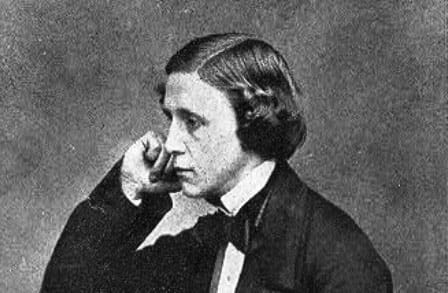
The poem and hymn is wide open for parody, particularly by somebody with greater respect for idleness and mischief, and Lewis Carroll (1832-1898) did parody it in How Doth the Little Crocodile, which was published in Alice’s Adventures in Wonderland in 1865.
How Doth the Little Crocodile by Lewis Carroll
How doth the little crocodile
Improve his shining tail
And pour the waters of the Nile
On every golden scale!
How cheerfully he seems to grin,
How neatly spreads his claws,
And welcomes little fishes in
With gently smiling jaws!
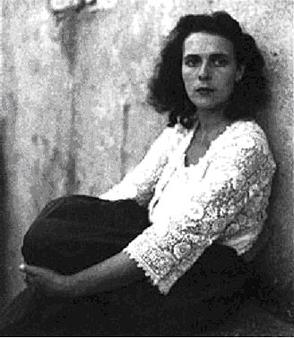
Leonora Carrington (1917-2011), the British and Mexican surrealist painter and sculptor, who lived most of her life in Mexico, both painted and sculpted the Little Crocodile. The sculpture hangs in Mexico City’s Paseo de Reforma, which we walked just a few weeks ago with our son and grandson. Sadly, I don’t remember seeing the sculpture, but I’ll be sure to find it next time.

 A Cairn of Poems
Leave a comment