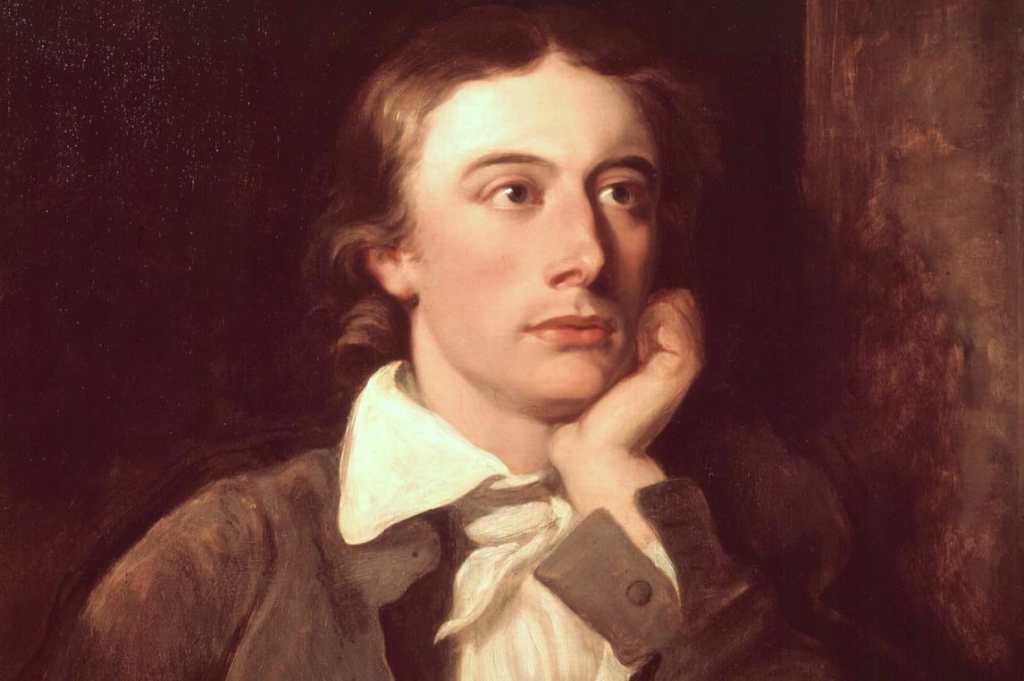
I find John Keats (1795-1821) an intoxicating poet. Reading his poems is to drink a “beaker full of the warm South,
Full of the true, the blushful Hippocrene,
With beaded bubbles winking at the brim,
And purple-stained mouth.”
I studied The Eve of St Agnes at school, find it the sexiest of poems, and return to it regularly. His odes can be read again and again just as I can listen to great music—Bach’s Cello Suites, Miles Davis’s Kind of Blue—again and again. Once a month I walk the Keats Path beside the Itchen in Winchester where he is said to have composed Ode to Autumn.
Some of his poems are impenetrable, but this sonnet is the simplest and loveliest of poems. It’s made hugely poignant by knowing that Keats died not long after he composed it, aged 25 and before his greatness was acknowledged. He never did glean all from his teeming brain, a lolss for us all, and, although he was a voracious reader, he had much left to read.
I’m 73, 48 years older than Keats when he died. In years I have lived his life almost three times. My brain continues to teem, for which I’m thankful, and I’ve gleaned a great deal, far too much. I can never get to the end of books, the only argument for immortality I find convincing, and I hope to die in the middle of not one but four books. Although I do not yet have a diagnosis of a fatal illness, I know a a time will come soon when I will stand alone on the shore and no longer be able to relish the faery power of my fair creature of not an hour but more than half a century.
When I have fears that I may cease to be by John Keats
When I have fears that I may cease to be
Before my pen has gleaned my teeming brain,
Before high-pilèd books, in charactery,
Hold like rich garners the full ripened grain;
When I behold, upon the night’s starred face,
Huge cloudy symbols of a high romance,
And think that I may never live to trace
Their shadows with the magic hand of chance;
And when I feel, fair creature of an hour,
That I shall never look upon thee more,
Never have relish in the faery power
Of unreflecting love—then on the shore
Of the wide world I stand alone, and think
Till love and fame to nothingness do sink.
 A Cairn of Poems
Leave a comment