Although I read poetry every morning, this passage of prose from Saint Paul’s epistle to the Corinthians seems more poetic to me than all the poetry I have recently read. The line between poetry and prose has never been clear and is perhaps becoming less clear as many poets abandon formal structures. I think of the difference as being something to do with intensity, perhaps number of impressions in the reader per word, with poetry being more intense than prose. By that criterion these 270 words are undoubtedly poetry.
I was led to this passage this morning by reading the phrases “sounding brass” and “tinkling cymbal” in Thackeray’s Vanity Fair, a novel that itself often ascends into poetry (as I will show in the future).
Whenever I read the Bible, I read the King James Bible, which has been described as the finest piece of prose in English. The passage is filled with phrases that every English person of my age will know—because we had them read to us at school and because we have heard and read them repeatedly during our lives.
What does Paul mean by “charity,” which is greater than faith and hope? It’s clearly something more than what we narrowly understand by charity because we can “bestow all my goods to feed the poor” and still lack charity. “Love” is closer to his meaning than “charity,” but it’s clearly not erotic love. Of the six words that the Ancient Greeks had for different kinds of love the love that Paul refers to it is closest to agape, the love of everyone, the love of Christ for all mankind, including those who condemned and killed him. https://richardswsmith.wordpress.com/2018/07/06/how-does-the-way-the-ancient-greeks-thought-of-love-fit-with-the-triangular-theory-of-love/ It was the Romans who confused us by translating agape as caritas, charity, and St Paul was a Roman citizen born in Turkey who died in Rome.
Think of the power of charity/love in that it can negate the gift of prophecy, the understand of all mysteries all knowledge, and even faith that can move mountains. I believe that to be the case.
Then the second paragraph gives a formula for living, one close to the philosophy of the Stoics. The Bible, Bertrand Russell said, is Greek philosophy, Jewish theology, and Roman law. I believe in the value of beareth and endureth all things but not in the believeth and hopeth all things.
I believe too that all prophecies will fail, all tongues cease, and all knowledge vanish. But charity will survive, as Philip Larkin, an unbeliever, wrote “What will survive of us is love.”
As I read the passage, I think repeatedly of T S Eliot, who was, of course, deeply influenced by the King James Bible. Despite some of the language being archaic the passage reads like a modernist poem.
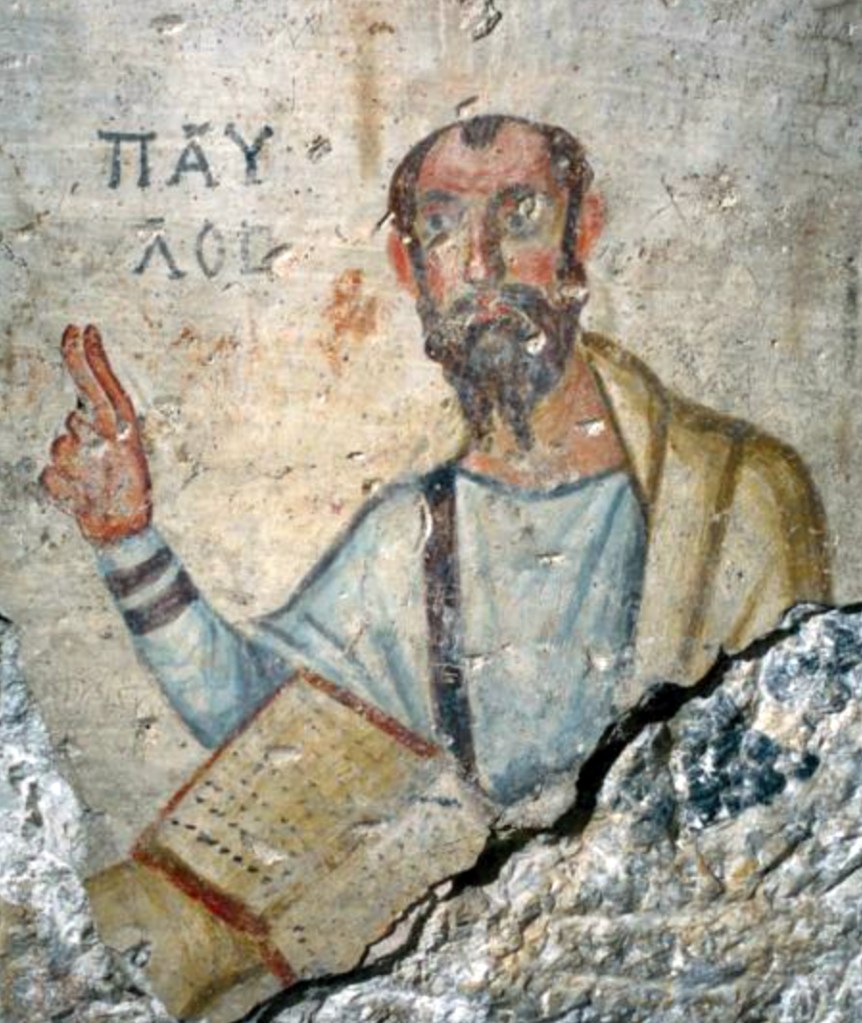
“Though I speak with the tongues of men and of angels, and have not charity [love], I am become as sounding brass, or a tinkling cymbal” by Saint Paul the Apostle
Though I speak with the tongues of men and of angels, and have not charity, I am become as sounding brass, or a tinkling cymbal. And though I have the gift of prophecy, and understand all mysteries, and all knowledge; and though I have all faith, so that I could remove mountains, and have not charity, I am nothing. And though I bestow all my goods to feed the poor, and though I give my body to be burned, and have not charity, it profiteth me nothing.
Charity suffereth long, and is kind; charity envieth not; charity vaunteth not itself, is not puffed up, Doth not behave itself unseemly, seeketh not her own, is not easily provoked, thinketh no evil; Rejoiceth not in iniquity, but rejoiceth in the truth; Beareth all things, believeth all things, hopeth all things, endureth all things.
Charity never faileth: but whether there be prophecies, they shall fail; whether there be tongues, they shall cease; whether there be knowledge, it shall vanish away. For we know in part, and we prophesy in part. But when that which is perfect is come, then that which is in part shall be done away. When I was a child, I spake as a child, I understood as a child, I thought as a child: but when I became a man, I put away childish things. For now we see through a glass, darkly; but then face to face: now I know in part; but then shall I know even as also I am known. And now abideth faith, hope, charity, these three; but the greatest of these is charity.
 A Cairn of Poems
Leave a comment