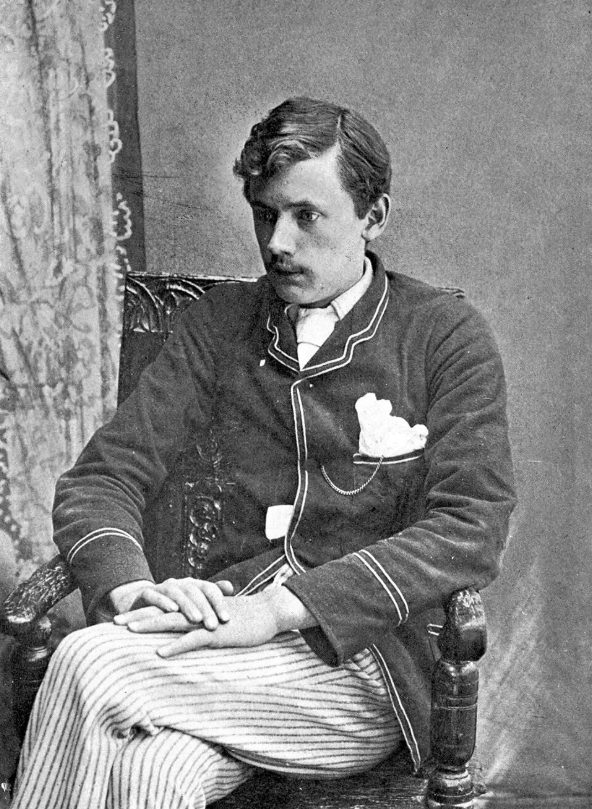
T S Eliot, according to Clive James, called Ernest Dowson (1867-1900) “the most gifted and technically perfect poet of his age.” But he seems to be remembered for only two poems and three phrases: Gone with the wind; Days of wine and roses; and I have been faithful to thee, Cynara! in my fashion (in other words, not faithful at all).
We know he is not faithful because he writes the lines while enjoying the kisses of a “bought red mouth.” He is experiencing what James thinks “an almost universal experience (one daringly assumes)” of being in the arms of one lover while thinking of another. James has clearly had that experience; whether I have, I could not possibly say.
According to the Guardian, Dowson’s favourite line of poetry was Poe’s, “The viol, the violet and the vine.” https://www.theguardian.com/books/booksblog/2011/mar/14/non-sum-qualis-cynarae-dowson He shared with Poe, continues the Guardian, the “ability to melt down the staccato language, English, till it flowed like a Romance language.” He manages that not only in the poem addressed to Cynara (Greek for artichoke) but also in Vitae Summa Brevis Spem Nos Vetat Incohare Longam, another poem inspired by Horace’s Odes.
These decadent poems tempt us into decadence, but I, like Horace, and too old.
Non sum qualis eram bonae sub regno Cynarae (I’m not what I was under the reign of the good Cynara) by Ernest Dowson
Last night, ah, yesternight, betwixt her lips and mine
There fell thy shadow, Cynara! thy breath was shed
Upon my soul between the kisses and the wine;
And I was desolate and sick of an old passion,
Yea, I was desolate and bowed my head:
I have been faithful to thee, Cynara! in my fashion.
All night upon mine heart I felt her warm heart beat,
Night-long within mine arms in love and sleep she lay;
Surely the kisses of her bought red mouth were sweet;
But I was desolate and sick of an old passion,
When I awoke and found the dawn was gray:
I have been faithful to thee, Cynara! in my fashion.
I have forgot much, Cynara! gone with the wind,
Flung roses, roses riotously with the throng,
Dancing, to put thy pale, lost lilies out of mind;
But I was desolate and sick of an old passion,
Yea, all the time, because the dance was long:
I have been faithful to thee, Cynara! in my fashion.
I cried for madder music and for stronger wine,
But when the feast is finished and the lamps expire,
Then falls thy shadow, Cynara! the night is thine;
And I am desolate and sick of an old passion,
Yea, hungry for the lips of my desire:
I have been faithful to thee, Cynara! in my fashion.
Vitae Summa Brevis Spem Nos Vetat Incohare Longam (The brief sum of life forbids us the hope of enduring long)
They are not long, the weeping and the laughter,
Love and desire and hate:
I think they have no portion in us after
We pass the gate.
They are not long, the days of wine and roses:
Out of a misty dream
Our path emerges for a while, then closes
Within a dream.


Leave a Reply