Until I just read about him in Wikipedia I knew only three things about James Hogg (1770-1835): he was called “The Ettrick Shepherd”; a man I worked with and admired, Roger Robinson, was doing a PhD on him after retiring as a professor of paediatrics; and he was somehow linked with Wordsworth.
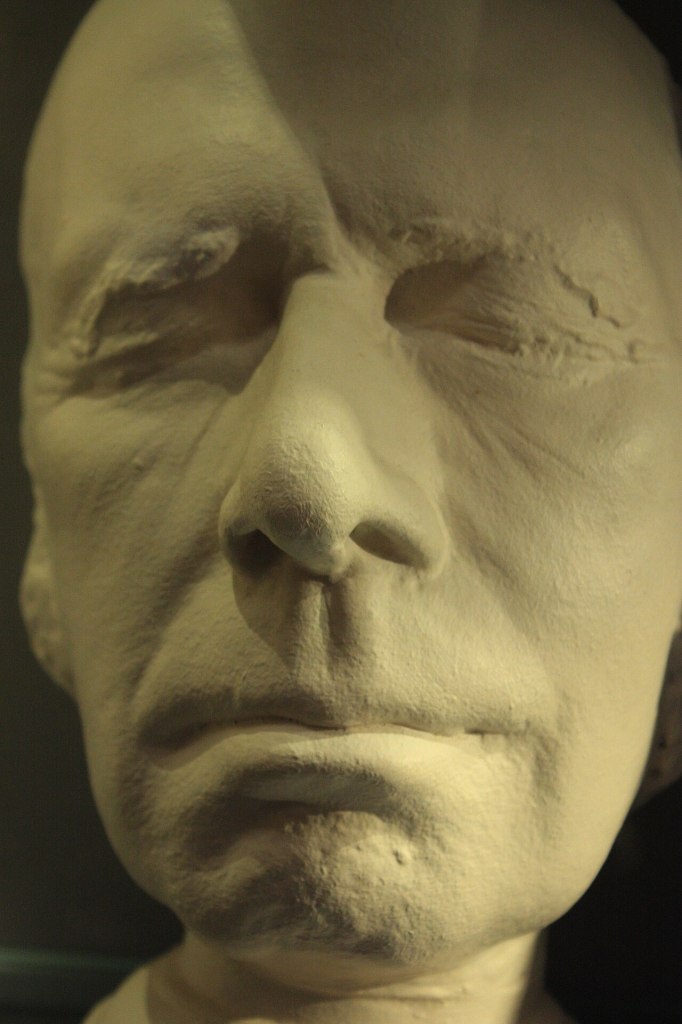
Hogg was much more than a shepherd from the Borders. He was a literary man and an amanuensis to Walter Scott (indeed, his head is on the Scott monument in Edinburgh). He moved to Edinburgh, worked on literary magazines, and wrote novels and poems. His best-known work The Private Memoirs and Confessions of a Justified Sinner became famous in the 20th century after being celebrated by Andre Gide. Wordsworth wrote a short eulogy for him:
The mighty Minstrel breathes no longer,
‘Mid mouldering ruins low he lies;
And death upon the braes of Yarrow,
Has closed the Shepherd-poet’s eyes.
But Wordsworth also observed that “He was undoubtedly a man of original genius, but of coarse manners and low and offensive opinions.”
I came across his poem in a collection of poems I have on my Kindle pretentiously entitled 1000 plus Greatest Poems of All Time. (They all are in English and so can’t possibly be the greatest of all time.) The poem A Boy’s Song seems to me capture wonderfully the joy of being a prepubescent boy. The poem would work best for somebody like Hogg born into the beauties of the Scottish Borders, but it works well for me too, a boy who played in the bombsites of postwar London.
A boy’s song by James Hogg
Where the pools are bright and deep,
Where the grey trout lies asleep,
Up the river and over the lea,
That’s the way for Billy and me.
Where the blackbird sings the latest,
Where the hawthorn blooms the sweetest,
Where the nestlings chirp and flee,
That’s the way for Billy and me.
Where the mowers mow the cleanest,
Where the hay lies thick and greenest,
There to track the homeward bee,
That’s the way for Billy and me.
Where the hazel bank is steepest,
Where the shadow falls the deepest,
Where the clustering nuts fall free,
That’s the way for Billy and me.
Why the boys should drive away
Little sweet maidens from the play,
Or love to banter and fight so well,
That’s the thing I never could tell.
But this I know, I love to play
Through the meadow, among the hay;
Up the water and over the lea,
That’s the way for Billy and me.


Leave a Reply